

In Defense of Writing in Books
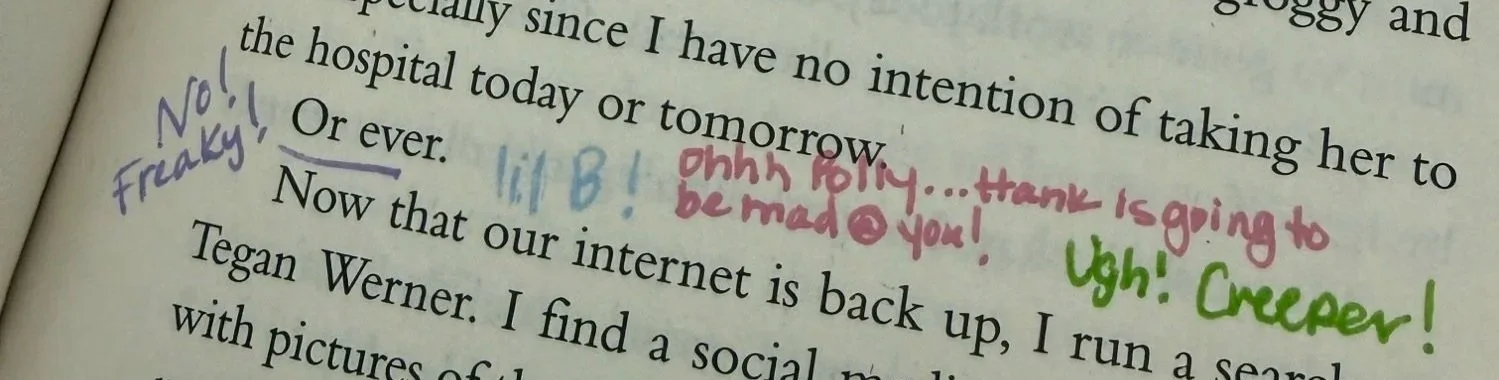
Reading annotated books taught me very quickly that stories never land the same way twice. One person circles a line because it’s beautiful. Another underlines it because it made them uncomfortable. Sometimes I nod along in agreement. Sometimes I read a margin note and think, interesting take, absolutely not. Both reactions have turned out to be equally useful.
It also changed how I think about finishing books. Completion stopped being the goal. A book could sit open for weeks without being abandoned. Sometimes it wasn’t unfinished at all. It was still working. I learned that the pause is often the point, even when it looks like procrastination from the outside.
Sharing books this way quietly removed the pressure to be a good reader. There was no polished opinion required, no summary to prepare, no moment where someone asked what you thought and expected a coherent answer on the spot. Just real reactions left behind in real time. Occasionally dramatic. Often honest. Sometimes written late at night when patience was low and subtlety had clocked out.
The margins taught me that reading has less to do with collecting stories and more to do with noticing yourself inside them. The lines that irritate you. The ones that stop you cold. The moments that feel uncomfortably accurate. Those are easy to miss when you’re racing toward the last page.
I still appreciate a clean book. But the ones that stay with me now are the slightly worn ones. Dog-eared. Annotated. Clearly lived in. The kind that prove someone was paying attention.
Sometimes the most important parts of a story are not the lines you remember later.
They are the moments you stopped long enough to write something beside them.
